The Home Has Always Been More Than Four Walls
There’s a particular stillness that settles over a well-designed home — the kind you feel the moment you step through the door. The light falls just right. The air moves. The spaces feel intentional, not accidental. You don’t always know why a home feels this way. You simply know that it does.
For thousands of years, Indian architectural philosophy has had a name for this feeling — and a science behind it.
Vastu Shastra, one of the world’s oldest systems of spatial design, isn’t folklore. It’s a sophisticated body of knowledge about how orientation, proportion, natural forces, and human well-being interact within a built environment. And increasingly, it’s finding a quiet, elegant place at the heart of modern Indian architecture.
Understanding Vastu in the Context of Modern Living
Vastu Shastra — derived from the Sanskrit word vāstu, meaning dwelling — is an ancient Indian system of architecture and spatial arrangement that dates back to the Vedic period. At its core, it deals with the relationship between a structure and the five natural elements: earth, water, fire, air, and space.
What makes Vastu remarkable is that it was never purely ceremonial. It was deeply practical. It considered sun movement across the day, wind direction, the thermal behavior of building materials, and the psychological effects of spatial organization — centuries before these became mainstream concerns in modern design.
Today’s architects and homeowners are rediscovering what Vastu always understood: the orientation of a home, the placement of its rooms, the direction of its openings — these are not arbitrary decisions. They shape how a home feels, functions, and endures.
Why Modern Homeowners Still Turn to Vastu
The resurgence of interest in Vastu among contemporary Indian homeowners is not about ritual. It’s about intention.
When families invest in building a home — particularly a luxury home or a generational property — they want more than square footage. They want spaces that support rest, creativity, and connection. They want a home that feels alive in the right ways.
Vastu offers a coherent spatial framework for that ambition. Placing the main entrance in a direction that receives morning light, orienting bedrooms to harness cooler breezes, designing kitchens that benefit from eastern sunlight — these are choices with practical dividends that align remarkably well with biophilic design, passive solar principles, and human-centric architecture.
In that sense, choosing Vastu-informed design is not a step backward. It’s a step toward greater spatial intelligence.
How Contemporary Architects Integrate Vastu Principles
The most skilled architects working on modern Indian homes don’t treat Vastu as a checklist — they treat it as a design language.
Orientation and Natural Light
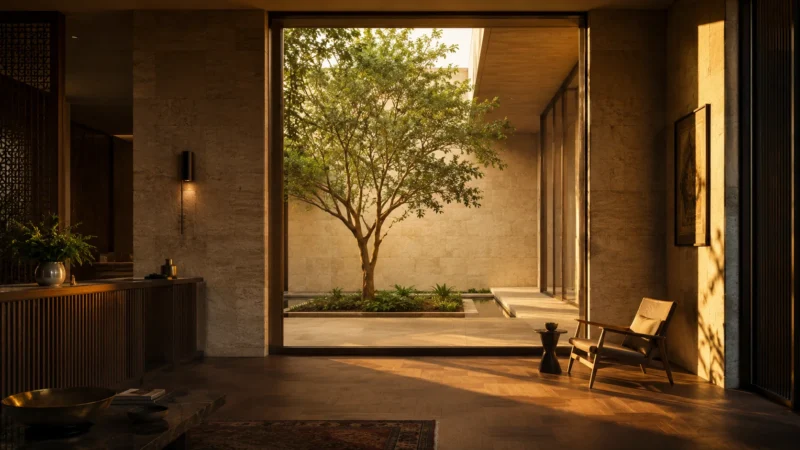
One of Vastu’s core principles — positioning the main entrance or primary living areas toward the north or east — aligns directly with passive solar design. Eastern-facing rooms receive cooler, softer morning light. North-facing spaces avoid harsh afternoon sun while remaining bright and airy. The result is architecture that reduces heat gain, maximizes daylight quality, and creates an effortlessly comfortable interior environment.
Open Courtyards and the Brahmasthan
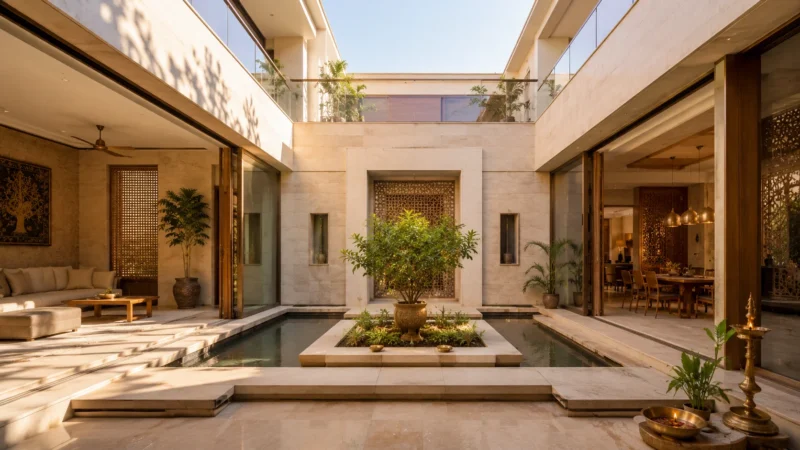
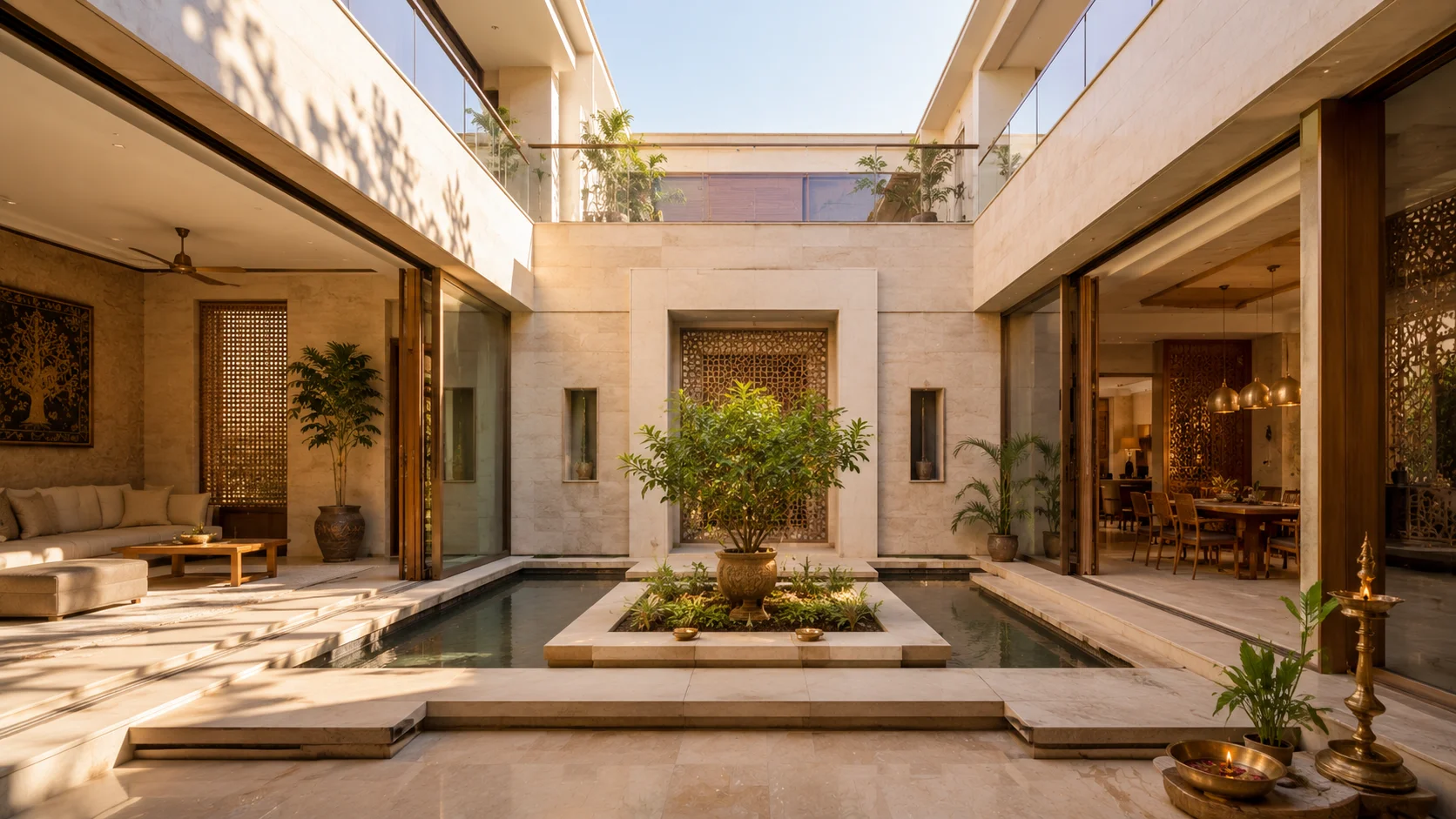
Traditional Vastu architecture reserved the central zone of a home — the brahmasthan — as an open, unobstructed space. In contemporary design, this translates beautifully into open-plan living areas, double-height atria, internal courtyards, or sky gardens. These spaces improve natural ventilation, reduce dependence on artificial lighting, and create a powerful visual and emotional anchor for the entire home.
Flow, Proportion, and Spatial Balance
Vastu emphasizes unobstructed movement and proportionate room dimensions. Modern architects express this through thoughtful circulation planning, avoiding cramped corridors, and designing rooms that feel neither cavernous nor confining. This is not superstition — it is good architectural practice, confirmed by decades of evidence in environmental psychology.
Balancing Aesthetics, Space, and Energy
A well-executed Vastu-informed home doesn’t look different from a beautifully designed contemporary home. It is a beautifully designed contemporary home.
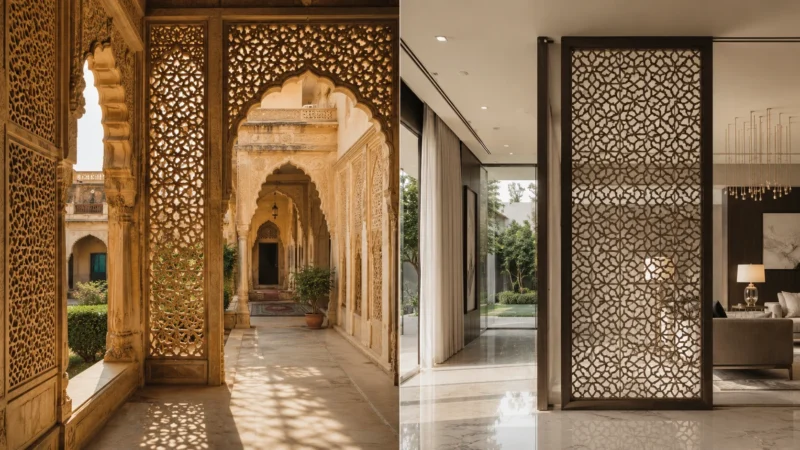
The integration is seamless when handled with skill. A minimalist luxury villa can have its master suite positioned optimally, its living spaces breathing with natural light from the right direction, and its service areas quietly tucked away — without a single compromise to its architectural language. Clean lines, expansive glass, premium materials, and spatial harmony are not in conflict with Vastu. In the hands of a thoughtful architect, they are expressions of the same underlying intelligence.
The key is to approach Vastu as a set of design principles — not rigid commandments. Contextual adaptation, site constraints, and the family’s lifestyle always matter. The goal is a home that performs exceptionally and feels profoundly right.
Common Myths About Vastu in Modern Architecture
Perhaps the biggest barrier to wider adoption of Vastu in contemporary design is the weight of misconception that has built up around it.
Myth: Vastu forces awkward layouts.
In reality, skilled integration of Vastu rarely demands compromise. Most Vastu principles — good orientation, natural light, unobstructed flow — reinforce good design rather than restrict it.
Myth: Vastu is only for traditional-style homes.
Modern architecture — with its emphasis on open plans, glass facades, indoor-outdoor connection, and sustainable systems — is arguably more naturally compatible with Vastu principles than heavily compartmentalized older building styles.
Myth: Vastu is about fear and bad luck.
At Naksha Planet, we approach Vastu the way thoughtful architects have always approached it: as an evidence-informed framework for creating homes that support human well-being. Nothing more, nothing less.
How Naksha Planet Designs Vastu-Friendly Modern Homes
At Naksha Planet, Vastu is woven into our design process from the earliest stages of site analysis and concept development — not added as an afterthought.
We work with the site’s natural orientation, the local climate, the family’s way of living, and the visual language they want their home to express. Vastu principles serve as a refinement layer within that process, guiding decisions around room placement, openings, circulation, and proportion in ways that enrich rather than constrain the design.
The result is homes that feel exceptional from the first visit — and continue to feel that way years later. Homes with a quality of presence that goes beyond the visible.
Whether you are designing a contemporary villa, an urban residence, or a family compound, our team brings architectural rigour, cultural intelligence, and a genuine understanding of how spaces shape lives. We believe that the best modern Indian homes carry the wisdom of their heritage quietly and confidently — in every line, every orientation, every carefully considered space.
A Home Built to Last, in Every Sense
The most enduring homes are rarely the most fashionable. They are the ones that were designed with understanding — of the land, the climate, the family, and the timeless relationship between human beings and the spaces they inhabit.
Vastu Shastra, at its best, is an expression of that understanding. And when it meets the precision and vision of contemporary architecture, it produces something rare: a home that is not only beautiful and modern, but deeply, quietly alive.
If you are planning your dream home and want a design that honours both the future and the wisdom of the past, we’d love to be part of that journey.
Explore our portfolio and connect with our design team at NakshaPlanet.com — and let’s build something that truly lasts.